Regenerative Agriculture
On 25 hectares of Alentejo farmland, we're transforming degraded pasture into a thriving food system. From mushroom farms and market gardens to commercial orchards and closed-loop composting, we're proving that regenerative agriculture can feed communities while healing the land.
TDF philosophy
At Traditional Dream Factory, agriculture is infrastructure for community resilience: we design for closed nutrient loops, transparent sourcing from our own land, and systems that neighbors and the broader OASA village network can learn from and replicate.
Regeneration means improving soil, water, and biodiversity every season—not only reducing harm. We pair strict organic practice with water retention, trees in the field, and low-disturbance beds so yields and ecology reinforce each other.
We treat this overview as a living document—practices shift with the seasons, and we revise numbers and emphasis as we learn from soil, water, and harvests.
Regenerative agriculture keywords
Our Approach
At Traditional Dream Factory, we're committed to regenerative agriculture practices that restore soil health, enhance biodiversity, and create resilient ecosystems. Our approach goes beyond sustainable farming—we actively regenerate the land while producing food and supporting our community.
Agroforestry Systems
Agroforestry is a regenerative land management approach that integrates trees, crops, and sometimes animals in symbiotic arrangements, mimicking natural forests while producing food, timber, and other products. Our systems enhance biodiversity, restore soil fertility, and sequester carbon. Learn more about agroforestry
Water Management
Our water retention systems include lakes and contour swales that capture and store rainwater, reducing erosion and supporting year-round agricultural production even in Portugal's dry summers. Learn more about water retention landscapes
Organic Methods
We use strictly organic methods that build soil organic matter, support beneficial microorganisms, and eliminate the need for synthetic inputs.
Key Practices
Mushroom Farm
Being scaled upOur container-based mushroom farm produces gourmet and medicinal varieties, creating a closed-loop system that transforms agricultural waste into high-value products.
Currently Growing
We cultivate several mushroom varieties using low-energy methods like cold water lime pasteurization.
Medicinal Extracts
We produce tinctures and extracts from medicinal mushrooms, in partnership with local producers.
2026 targets: On-site restaurant, 2-3 local partner restaurants, village shop, and member subscriptions.
Market Garden
In full productionOur no-till rotation market garden is designed to feed our community year-round with fresh, organic vegetables.
Our beds are fed with compost from our chicken composters, creating a closed nutrient loop from kitchen scraps to vegetables.
Commercial Orchard
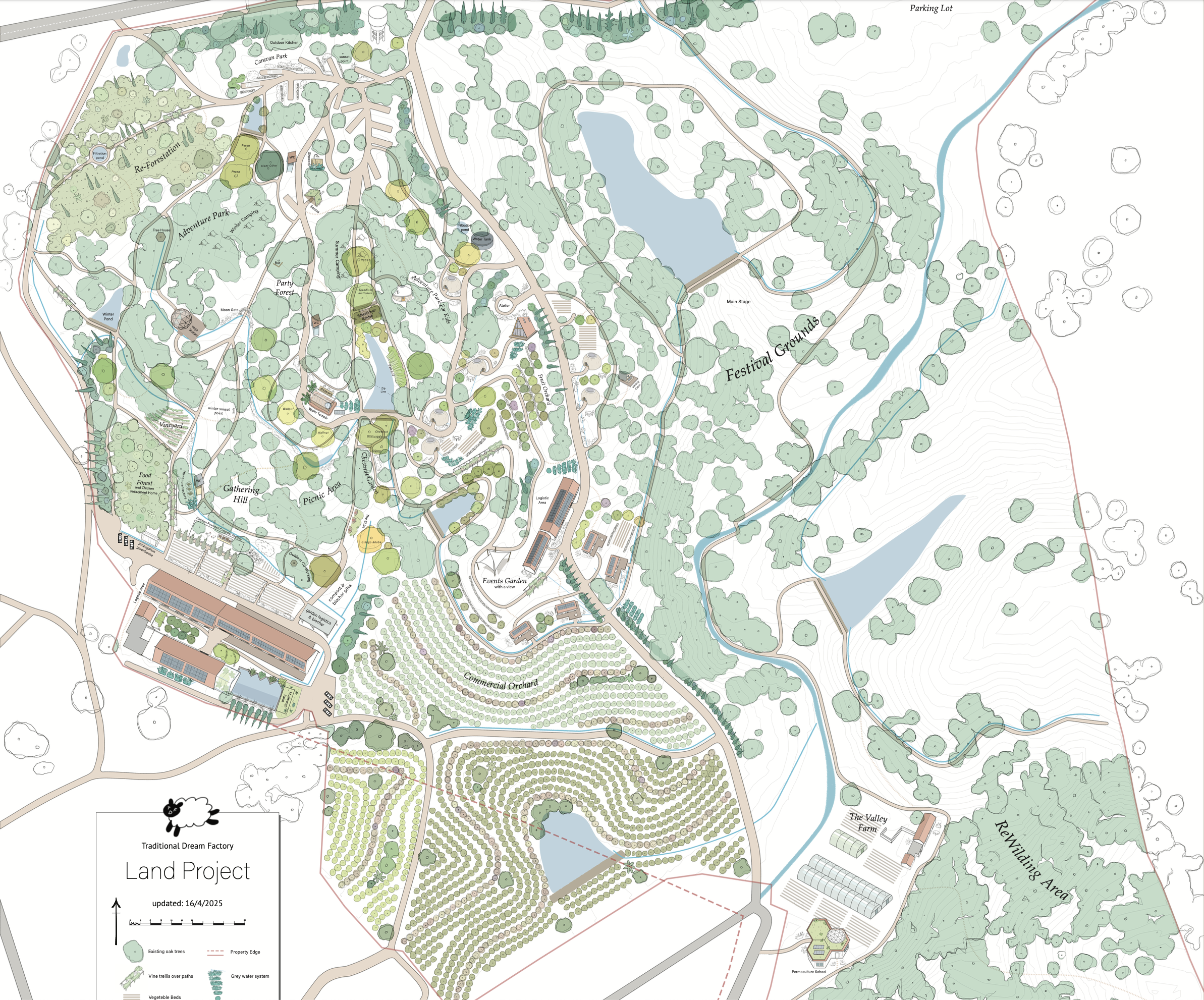
PlannedAcross 4 orchard zones, we're planting drought-resistant trees for high-value products processed on-site.
All products processed on-site for restaurant, shop, and member subscriptions. Plus apple, citrus, pomegranate, and peach for community self-sufficiency.
Closed-Loop Systems
Egg Production & Composting
Our chickens serve a dual purpose: they compost bio-waste and kitchen scraps in chicken composters, while providing the community with fresh eggs daily.
Scaling to 100% egg self-sufficiency
Vermicompost
Worm composting is the final step in our humanure system, transforming waste into high-quality compost.
The finished vermicompost is used to feed our fruit trees and orchard, completing the nutrient cycle.
Biochar Production
Pyrolysis heater producing biochar while supplying heat to our buildings.
Expected to start late 2026
Impact & Vision
Our regenerative agriculture practices create measurable environmental impact through carbon sequestration, biodiversity enhancement, and soil restoration. We're building a model that can be replicated across Portugal and beyond, demonstrating that agriculture can be a force for ecological restoration.